Governing AI in Financial Services: Architecture, Auditability, and Compliance
For compliance teams, adopting AI isn't about avoiding risk, it is about controlling it. Keeping models inside private infrastructure with clear audit trails and human sign off lets institutions move fast without breaking regulatory trust.
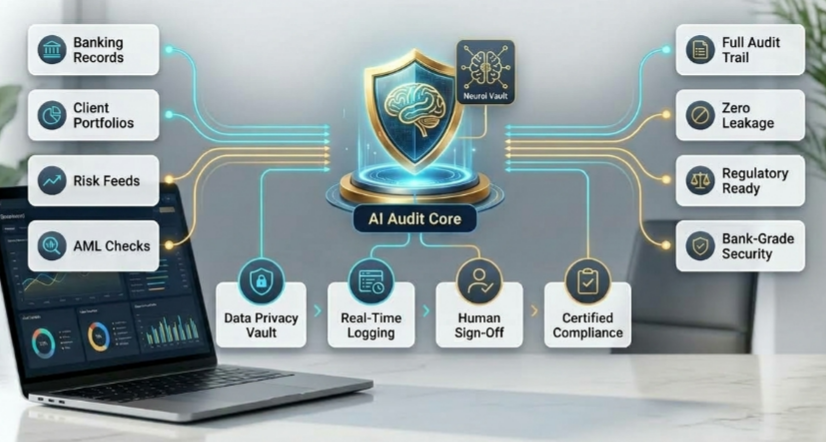
Three essential safeguards
Regulators don't ban AI, they penalize unexplainable systems. To deploy models safely in banking, wealth management, or insurance, three controls are essential:
Customer accounts and transaction histories never touch public models. Workloads run inside your dedicated cloud perimeter with zero external retention.
The model is never allowed to guess. Every summary or answer is anchored directly to verified internal files, with precise paragraph source citations.
Every inference, prompt alteration, and sign off decision is logged with model IDs and timestamps, ready for immediate regulator inspection.
Faster compliance, not slower
With these safeguards in place, AI handles the heavy lifting of routine document checks, transaction screening, and intake filings. Compliance specialists stop drowning in manual reviews and focus on high risk edge cases without creating regulatory blind spots.
Frequently Asked Questions
Does client data ever reach public models?
No. Workloads run on private infrastructure with zero retention policies, keeping all client information inside your institutional boundary.
Where do humans fit into automated decisions?
AI outputs serve as drafts or recommendations. Licensed compliance professionals retain exclusive authority to approve, reject, or execute any action.